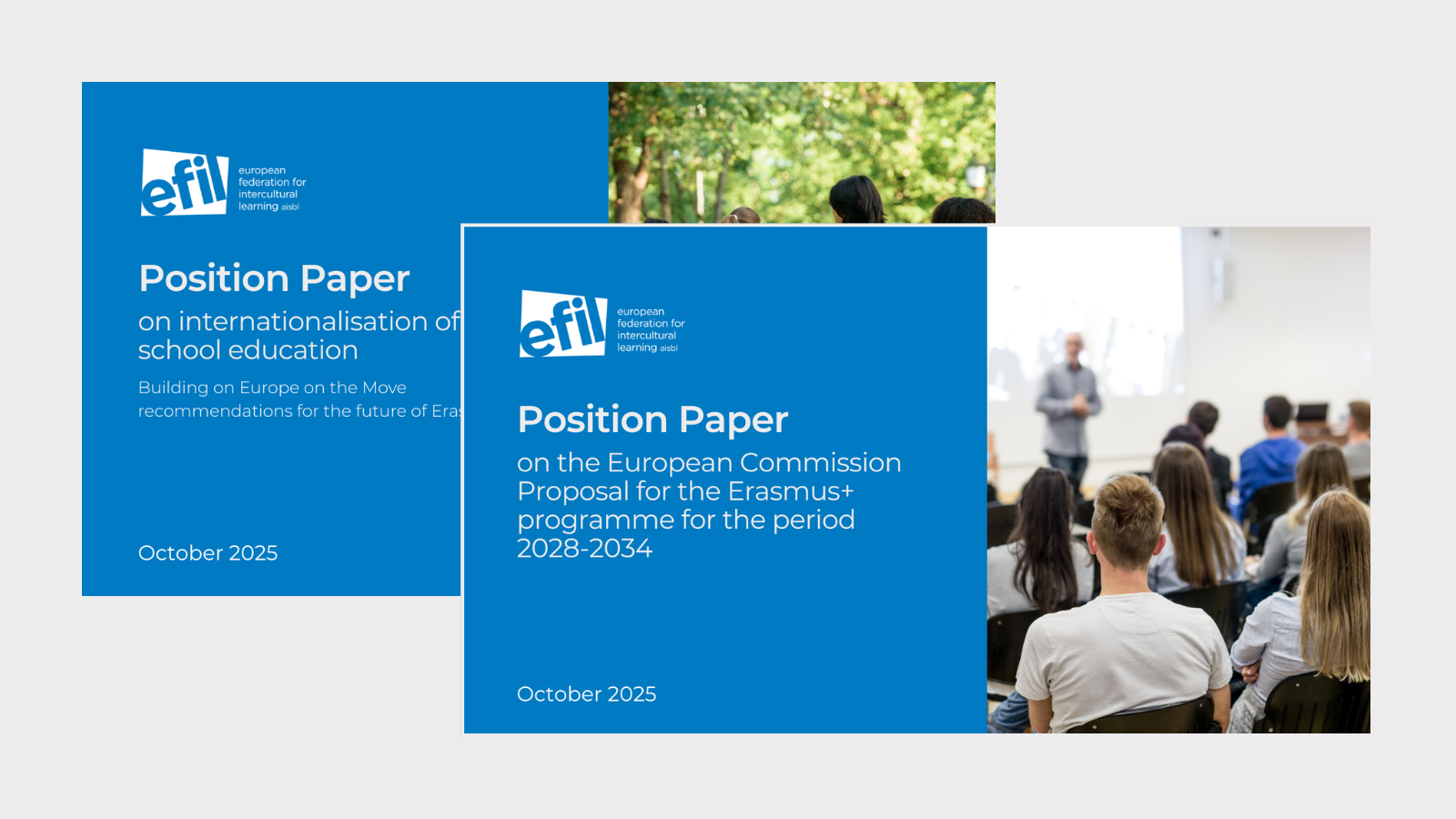
As discussions around the future of European mobility and education heat up, the European Federation for Intercultural Learning (EFIL) has published three pivotal position papers over the past year. Together, these documents advocate for stronger support for long-term pupil mobility, equal recognition of learning periods abroad, and an inclusive, transformative vision for the upcoming Erasmus+ (2028–2034) programming period. Here is a quick look at EFIL’s latest key recommendations for policymakers and educators across Europe:
1. EFIL Reaction to the European Parliament Report on the Erasmus+ 2028–34 Proposal
In its latest response to the European Parliament’s report, EFIL highlights critical priorities for the next generation of the programme. EFIL calls on European decision-makers to:
-
Sustain long-term pupil mobility: Ensure individual school exchange programmes continue to receive strong structural and financial backing.
-
Guarantee automatic recognition: Eliminate administrative and academic hurdles for secondary school pupils returning from a study period abroad.
-
Empower non-profit cooperation: Strengthen formal partnerships between schools and non-profit mobility organisations to advance active European citizenship and build a resilient European Education Area.
2. Internationalisation of School Education: Building on “Europe on the Move” Recommendations for the future Erasmus+
Aligning with the EU Council’s Europe on the Move initiative—which aims to make learning mobility the norm rather than the exception—EFIL’s position paper sets out a strategic roadmap for school education:
-
Inclusive mobility pathways: Expanding access to individual exchanges, short-term mobility, and blended learning options for pupils from all socio-economic backgrounds.
-
Supporting teachers and schools: Embedding internationalisation directly into school curricula and equipping educators with the training and support needed to facilitate intercultural learning.
-
Promoting “Internationalisation at Home”: Ensuring that non-mobile pupils also benefit from cross-cultural and global perspectives within their local classrooms.
3. EFIL Position Paper on the European Commission Proposal for Erasmus+ 2028–2034
Reacting to the European Commission’s legislative framework for the post-2027 MFF budget, EFIL outlines its core demands to keep Erasmus+ transformative:
-
Holistic view of skills: Calling on the EU to look beyond narrow labour-market employability by continuing to value civic engagement, solidarity, and intercultural understanding as essential outcomes of learning mobility.
-
Dedicated support for young learners: Safeguarding funding streams dedicated to non-formal education, youth participation, and secondary school exchanges.
-
Fair access and simplified administration: Streamlining application processes so grassroots non-profit organisations and resource-limited schools can navigate the programme effortlessly.
Learn More & Download
Read the full text of all three position papers and explore EFIL’s ongoing advocacy work on the EFIL Resources Hub.
Want to have an easy overview of the current status of Individual Pupil Mobility in Europe?